HomeGalleryFAQAdvice
Contact
Residential · October 27, 2026
You bring home a new electric dryer, pull it up to the wall, and the plug doesn't match the outlet. It's one of the most common calls we get from Valley homeowners, and the right fix depends on the wires behind that outlet, not the shape of the holes.
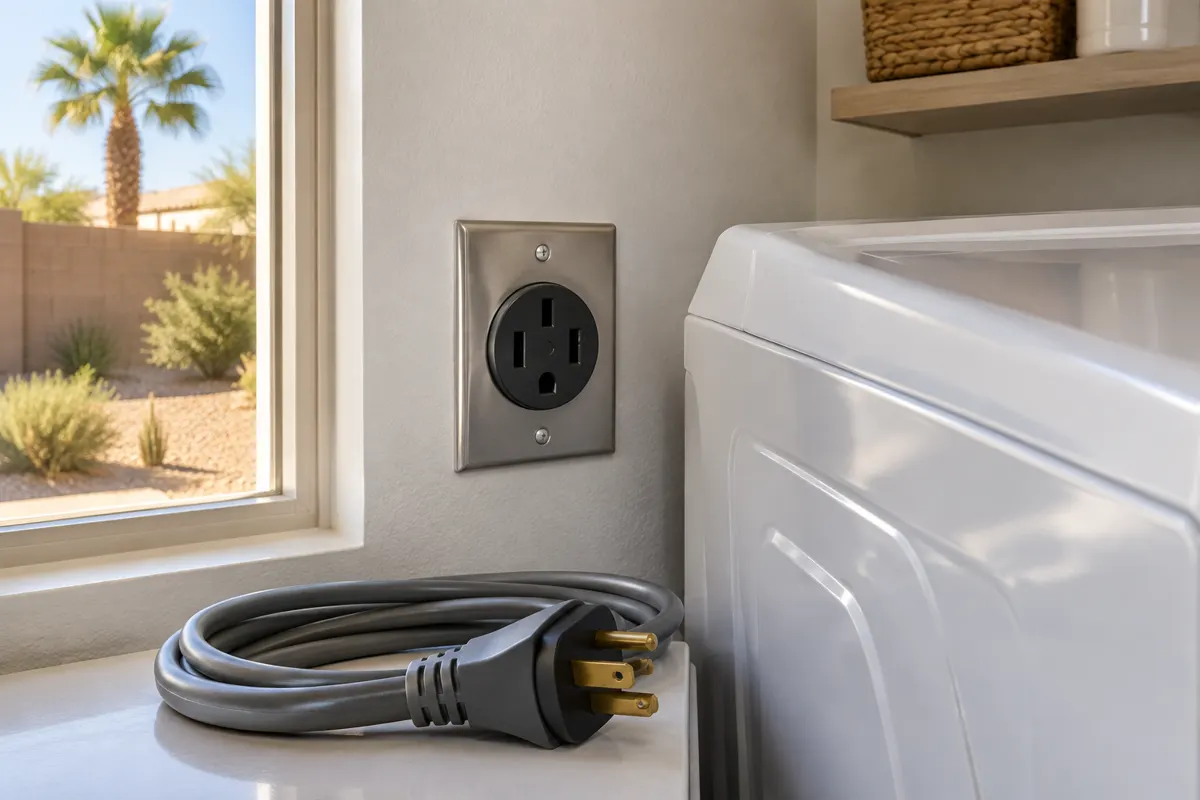
The 3-prong vs. 4-prong dryer outlet question comes up in Phoenix all the time, because so many Valley homes were built before the rules changed. Older homes usually have a 3-slot dryer receptacle. Newer homes, and any dryer circuit installed new since the mid-1990s, use a 4-slot receptacle. Electric dryers can work with either one, but only if the cord, the outlet and the wiring all match. Here's how to tell what you have and what the safe options are.
An electric dryer runs on 240 volts, and most of its motor, timer and controls also use 120 volts. That takes two hot wires and a neutral. The question is how the metal cabinet of the dryer gets grounded:
Existing 3-wire dryer circuits that were installed correctly at the time are generally allowed to stay. A 3-prong outlet isn't automatically a violation, but it's less forgiving, and it's worth upgrading when the circuit is already being worked on.
Safe choices, from simplest to most thorough.
B and D Electric LLC · banddelectricaz.com
Most new electric dryers are sold without a power cord, precisely because the store doesn't know which outlet you have. If your laundry room has a 3-slot outlet in good condition, the usual answer is a 3-prong dryer cord installed exactly as the dryer's manual shows, including the neutral-to-frame strap. If you have a 4-slot outlet, you use a 4-prong cord and remove that strap so the frame connects only to the green ground wire.
The most common mistake we find is a 4-prong cord installed with the strap left in place. It works, so nobody notices, but it ties the neutral and ground together at the dryer, which defeats the purpose of the fourth wire. If an installer or a previous owner hooked up the cord, it's worth a look behind the small cover on the back of the dryer.
It's tempting to buy a 4-slot outlet, wire it to the old 3-wire cable and jumper the neutral to the ground terminal so the new plug fits. Don't. The outlet looks modern, but there's still no separate ground behind it, and the next person who sees four slots will assume there is. It's the 240-volt version of the bootleg ground we describe in our post on two-prong outlets in Phoenix homes, and home inspectors look for it.
The thorough fix is a new 4-wire circuit from the panel to a 4-slot outlet. It makes sense when:
How involved the run is depends on how far the laundry is from the panel. In many single-story Valley homes the panel is on an outside wall and the laundry is inside or in the garage, so the route goes through the attic. We plan that work for the cooler part of the day. A new 30-amp circuit also needs room in the panel; if your panel is full, our panel upgrade cost guide explains the options.
Dryers draw a lot of current for an hour or more at a time, so a weak connection shows up there first. Turn the dryer off and call an electrician if you notice:
A no-heat dryer is often the dryer itself, but it can also be one hot leg missing from a loose connection or a failing breaker. Our post on a hot outlet or burning smell covers what to do in the moment. Lint is the other half of dryer safety: the U.S. Fire Administration lists failure to clean as the leading factor in home clothes dryer fires from 2018 to 2020 on its appliance and electrical fire page. Clean the lint screen every load and keep the vent run clear.
A lot of Valley homes put the washer and dryer in the garage. In summer that garage can be hotter than the outside air, and the dryer adds heat of its own. Heat is hard on worn connections and on old outlets with tired contacts, so a plug that fits loosely in a garage outlet deserves attention sooner. Keep the cord from being crushed behind the dryer, and don't use an extension cord or adapter on a dryer.
Since the dryer outlet is often the only 240-volt outlet in the garage, people ask about using it for an EV. Unplugging the dryer every night isn't practical, and homemade splitters aren't safe. There are listed sharing devices and other ways to add charging without a full upgrade, covered in our post on EV charging without a panel upgrade.
Tempe has a big stock of 1960s and 70s ranch homes, plus older rentals near ASU that turn over tenants and appliances often. Those homes are where we most often find 3-wire dryer circuits, mismatched cords and outlets that have been swapped more than once. Some also have aluminum branch wiring or original panels, so we check the panel and the cable when we look at the dryer circuit, not just the outlet.
Send us a photo of the outlet, the plug on your dryer cord and the label inside your panel door, and we'll tell you whether a cord change will do or the circuit should be upgraded. Our residential electrical page covers the rest of what we do around the house. B and D Electric LLC is licensed and bonded, Arizona ROC 361086, and our two owners have more than 40 years of combined experience. Call or text (480) 828-1181, or request an estimate.
Tell us what's going on and we'll give you a straight answer and a free written estimate. No pressure, no upsell.