HomeGalleryFAQAdvice
Contact
Residential · October 25, 2026
October is when Phoenix moves back outside, and it's when people notice the backyard has one outlet, behind the grill, on a circuit that trips. Here's how to plan outdoor power that holds up to our sun and our storms.
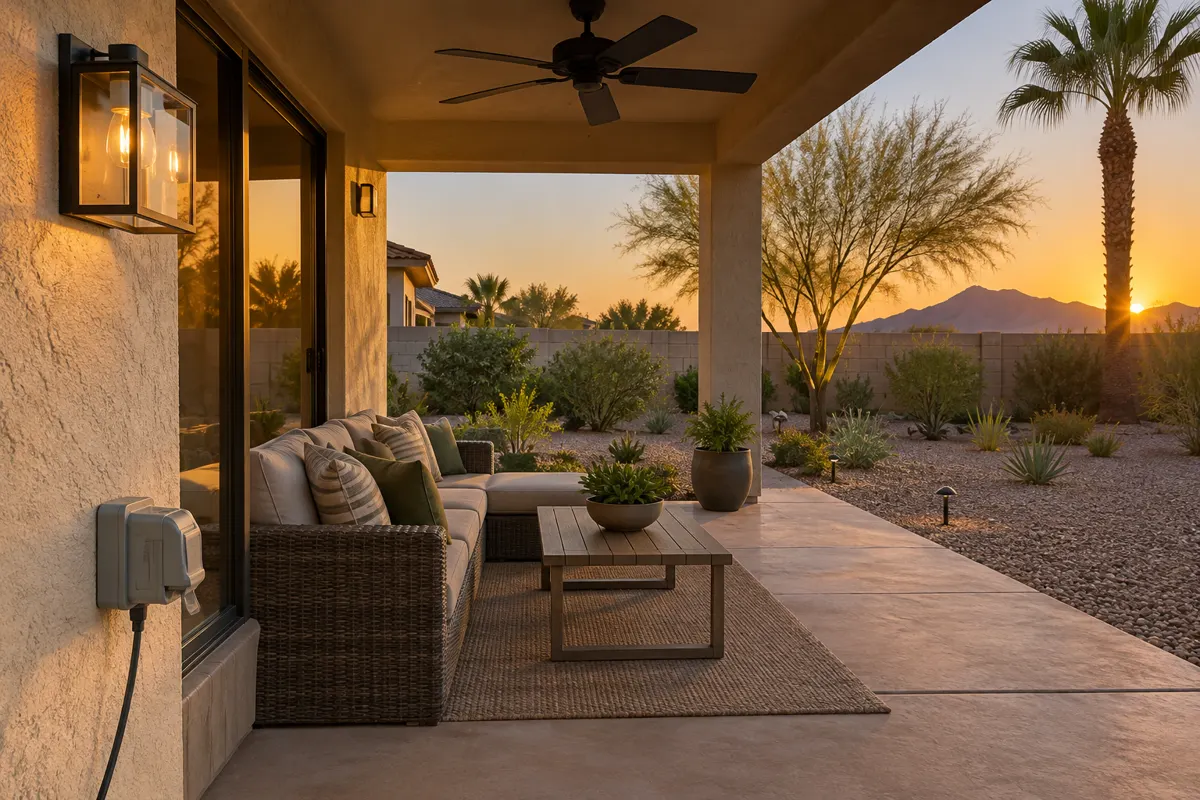
Outdoor outlet installation in Phoenix comes up every fall. Homeowners want power for patio heaters, string lights, a misting system, a fountain, a TV under the patio cover or an outdoor kitchen, and the house was built with the bare minimum. Adding outdoor receptacles is usually a modest job, but outdoor wiring has to survive things indoor wiring never sees: direct sun, 115-degree stucco, sprinkler overspray, dust and sideways monsoon rain. Done right, it's safe for years. Done with indoor parts and an extension-cord mindset, it trips constantly or worse.
Before anyone cuts into stucco, walk the yard and think about where cords end up today. That's usually where an outlet belongs. The most common requests we see:
Also list what you'll plug in. A string of LED lights draws very little. An electric patio heater, a spa, a beverage fridge and a misting pump are real loads, and a few of them on one 15- or 20-amp circuit is how a backyard ends up tripping every evening.
An outdoor receptacle isn't just an indoor outlet on an outside wall. Current electrical code calls for several things together:
If an existing outdoor outlet keeps tripping, it's often water in a box with the wrong cover, or a worn-out GFCI. Our post on GFCI outlets that keep tripping walks through the usual causes.
What a properly installed patio or yard outlet should have.
B and D Electric LLC · banddelectricaz.com
Arizona sun is hard on plastic. Covers, cords and cheap boxes on west- and south-facing walls turn brittle and chalky, then crack, and a cracked in-use cover lets the next monsoon storm straight into the box. When we install outdoor outlets we prefer locations under the patio roof where practical, and we use heavy-duty covers. When you're walking the yard, look for faded, cracked or missing covers and for outlets that sprinklers hit every morning. Both are cheap fixes before they become a tripping or corrosion problem.
Monsoon wind drives rain sideways under patio covers that stay dry the rest of the year, so an outlet that seems protected can still get wet. That's exactly why the in-use cover and GFCI matter even under a roof.
A cord run from the garage to the patio every weekend is a sign you need an outlet. Outdoor cords get stepped on, pinched in doors, chewed by pets and baked by the sun. The U.S. Fire Administration's electrical fire safety guidance covers cord and outlet habits worth following indoors and out. If an outdoor outlet or plug is ever hot or discolored, stop using it and read our post on hot outlets and burning smells.
One or two outdoor receptacles can often be added to an existing circuit if it has capacity. An outdoor kitchen, an electric patio heater, a spa or a detached pergola with lights and fans usually needs new circuits, and that means space in the panel. In many Valley homes the panel is already full. Sometimes a subpanel solves that, and sometimes the service itself is the limit. Our post on subpanel vs. panel upgrade explains the difference, and our panel upgrade cost guide covers what drives cost if it comes to that. For pools and spas, which have their own rules, see our pool and spa electrical guide.
If the walls are open for outlets, it's the cheapest time to add a switched circuit for patio lighting, a ceiling fan or landscape lighting transformers. Outdoor fans need a damp- or wet-rated fixture depending on exposure. See our lighting installation and ceiling fan installation pages, or our post on landscape lighting.
In Gilbert, many homes are newer and already have the basic front and back GFCI outlets, but those were placed by the builder, not around how a family actually uses the yard. Large covered patios, outdoor kitchens and pergolas added after move-in are common, and the HOA may have its own rules about what's visible from the street. Run any exterior change past your HOA first, and ask us whether the work needs a town permit before it starts.
Tell us what you want to plug in and where, and we'll tell you what the house can support and what it needs. Our residential electrical page covers the rest of what we do. B and D Electric LLC is licensed and bonded, Arizona ROC 361086, and our two owners have more than 40 years of combined experience. Call or text (480) 828-1181, or request an estimate.

Tell us what's going on and we'll give you a straight answer and a free written estimate. No pressure, no upsell.