HomeGalleryFAQAdvice
Contact
Troubleshooting · October 23, 2026
A wall outlet that feels hot, a switch plate that's turning brown, or a faint burning-plastic smell you can't place are all things to act on, not wait out. Here's what usually causes them, what you can safely do right now, and what an electrician will look for.
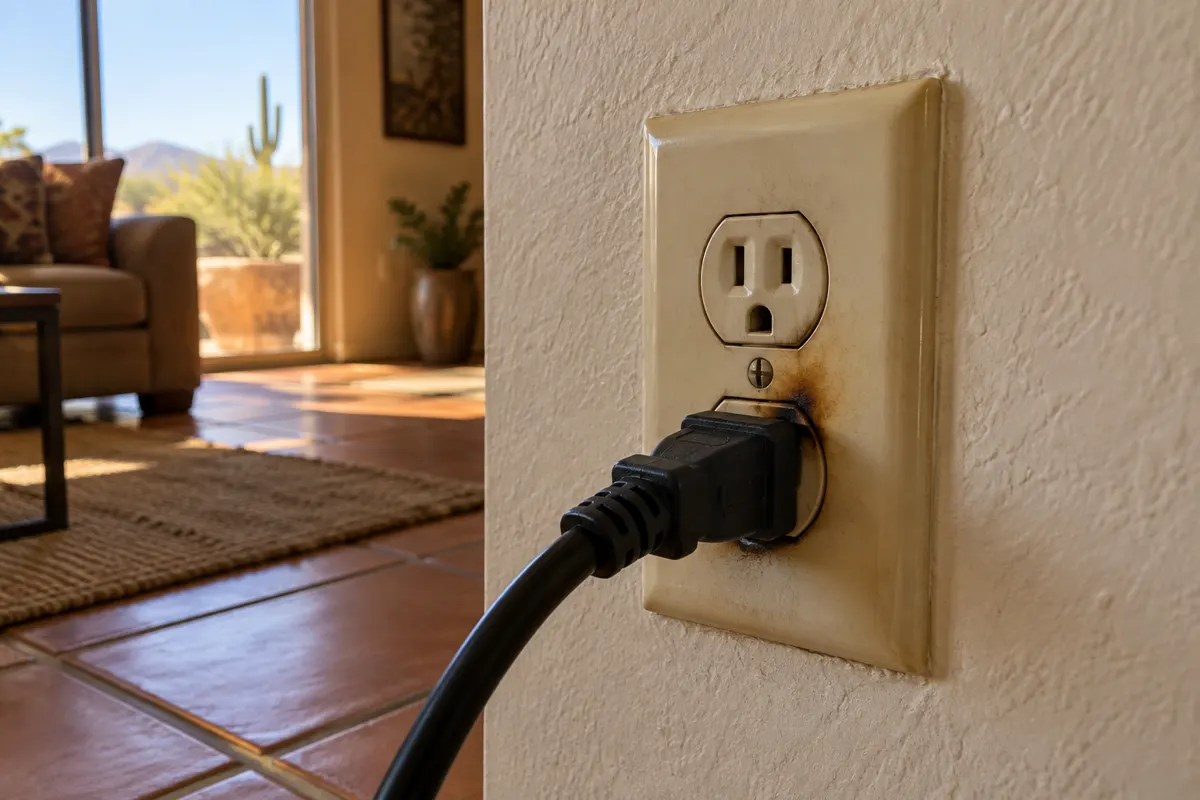
A hot outlet or a burning smell in a Phoenix home almost always means heat is building up somewhere it shouldn't: at a loose wire connection, inside a worn-out receptacle, or on a circuit carrying more than it was built for. Electricity that has to push through a bad connection turns into heat, and that heat can melt plastic and char the wood or insulation around the box. The good news is that most of these problems are caught early, when the only sign is warmth, discoloration or a smell.
Do these in order. Stop and call 911 at any sign of smoke or fire.
B and D Electric LLC · banddelectricaz.com
Outlets and switches aren't supposed to get noticeably warm in normal use. When one does, it's usually one of these:
One exception: a dimmer switch can feel slightly warm to the touch, because it sheds some heat while it works. Warm is one thing. A dimmer that's too hot to keep your hand on, buzzes loudly or has a discolored plate is not normal.
It helps to notice where the heat is. If the plug and cord are hot along their length, the appliance or cord may be the problem, or it's simply drawing more than that cord can handle. If the outlet face or cover plate is hot and the cord is only warm near the plug, the problem is more likely in the receptacle or the wiring behind it. Either way, stop using it until you know which.
The U.S. Fire Administration's appliance and electrical fire safety page advises plugging major appliances directly into a wall outlet, never using an extension cord with them, not overloading outlets or power strips, and replacing wall outlets when plugs don't fit snugly. It also reports an estimated 24,200 residential electrical fires in the U.S. in 2021.
Electrical burning often smells like hot plastic, and many people describe it as a fishy smell. If you smell it but can't find the source:
If the smell comes and goes with a particular appliance or with the AC starting, mention that when you call. It narrows the search a lot.
People are surprised that an outlet can melt without the breaker ever tripping. A standard breaker trips on too much current or a short. A loose connection can get very hot while the current on the circuit stays normal, so the breaker never sees a problem. That's why heat and smell are warning signs on their own. Some older panels also have breakers with a reputation for not tripping when they should; if your home has one, read our page on Federal Pacific and Zinsco panel replacement.
If an outlet went dead after getting hot, the connection may have burned open. Our guide to an outlet not working when the breaker isn't tripped explains how that happens and why it affects other outlets on the same run.
With the power off, we open the box and look at the receptacle, the wire ends and the box itself. A scorched outlet usually gets replaced with a new, properly rated device, with the wires stripped back to clean copper and fastened under the screw terminals instead of push-in holes. We check the other outlets on that circuit, because a loose connection upstream can be the real cause, and we look at the breaker and the panel connection for that circuit.
If the outlet keeps getting hot because a space heater, portable AC or kitchen appliance runs on it every day, the real fix may be a dedicated circuit for that load. If we find aluminum wiring, brittle insulation or several damaged boxes, we'll explain the options, from targeted repairs to rewiring part of the house. Our electrical troubleshooting page explains how we track down problems like this.
Much of Glendale was built out in the 1970s and 1980s, and a lot of those homes still have their original outlets and switches. After 40 or 50 years, the contacts in a receptacle wear out, and the outlets that get used hardest, like the one behind the TV, the one for the microwave or the garage outlet for the freezer, are the ones we see fail. Garages and exterior walls in the West Valley also get very hot in summer, which adds heat to connections that are already marginal. If plugs fall out of your outlets or the plates have yellowed, it's worth having them looked at before one gets hot.
If an outlet or switch in your home is hot, discolored or smells burnt, switch off the circuit and call us. For smoke or fire, call 911 first. For urgent problems, see our emergency electrician page. B and D Electric LLC is licensed and bonded, Arizona ROC 361086, and our two owners have more than 40 years of combined experience. Call or text (480) 828-1181, or request an estimate.
Tell us what's going on and we'll give you a straight answer and a free written estimate. No pressure, no upsell.