HomeGalleryFAQAdvice
Contact
Panels & Service · October 21, 2026
Water heaters are having a moment in the Valley. Homeowners are replacing old tanks with electric tankless units, heat pump water heaters, or switching from gas to electric altogether. The plumbing gets most of the attention, but the electrical side is often what decides whether the plan works, and what it costs.
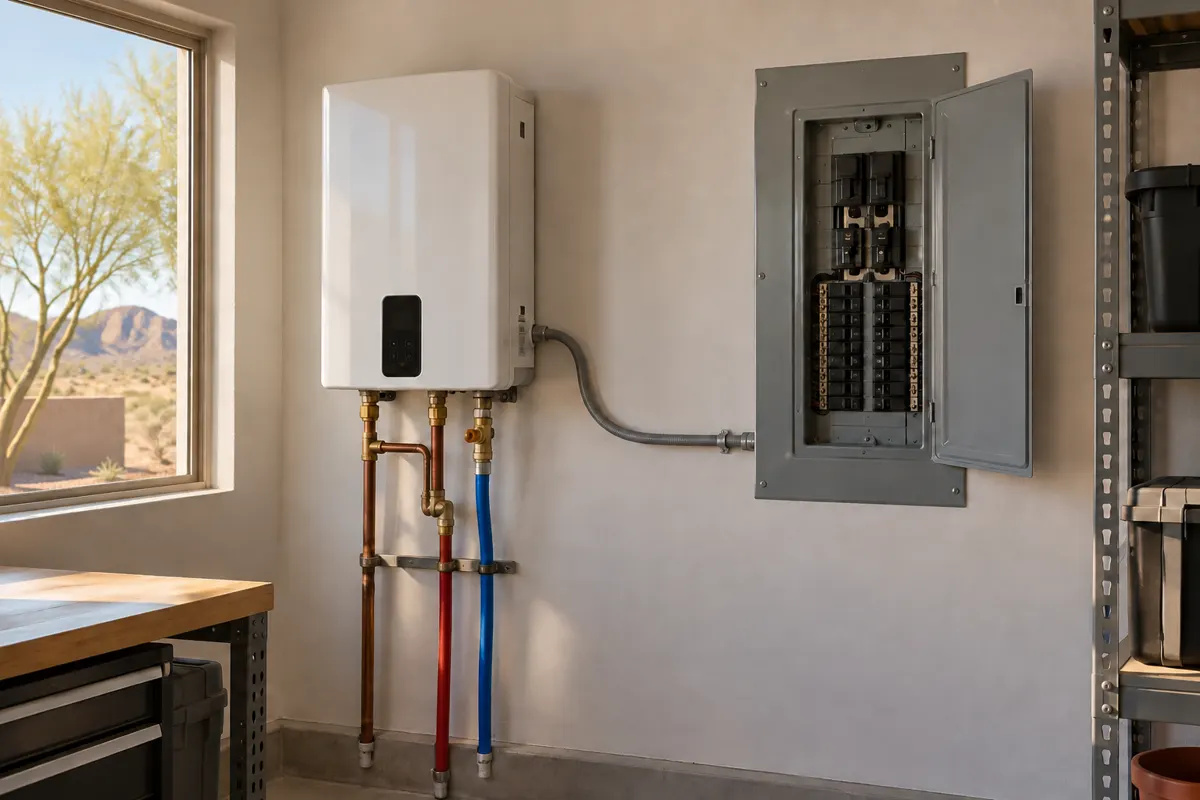
An electric tankless water heater in Phoenix can need more electrical capacity than almost anything else in your house. Before you buy one, it helps to know how much power it draws, whether your panel can carry it, and how it compares with a standard tank or a heat pump water heater. Here is what we look at when a homeowner calls about a water heater change.
A tankless heater warms water only while it flows, so it has to heat it fast. That takes a lot of power at once. A small point-of-use unit under a sink may need one modest circuit. A whole-house electric tankless unit is a different animal:
Standard electric tank. Most run on one dedicated 240-volt circuit. If you're replacing a tank with a similar tank, the existing circuit is usually reused after a quick check of the wire, breaker and connections.
Heat pump water heater. These pull heat from the surrounding air, so they use far less electricity than a standard tank to make the same hot water. Many run on a 240-volt circuit similar to a standard tank. Some newer models are made to run on 120 volts, which can make a switch from gas easier. Check the manual for the circuit it requires.
Electric tankless. The biggest electrical demand of the three, as described above. It saves floor space and never runs out of hot water, but the wiring and panel side is a real project.
Gas tankless. If you're keeping gas, most gas tankless units still need a 120-volt outlet or circuit for their controls and fan. That's a small job, but it should be planned so you don't end up with an extension cord in the garage.
Settle these before the old heater comes out.
B and D Electric LLC · banddelectricaz.com
It might. This is the question that matters most, and the answer comes from a load calculation, not from looking at the main breaker size. The calculation adds up what your home already uses, including one or two AC systems, the range, the dryer and pool equipment, then adds the new heater. Our post on AC load and your electrical panel walks through how that works in a Phoenix home.
If the panel has capacity but no open spaces, a subpanel may solve it. Our subpanel vs panel upgrade post explains the difference. If the service itself can't carry a whole-house tankless unit, you're looking at a service upgrade. Our 200-amp vs 400-amp guide covers when a bigger service makes sense, and the panel upgrade cost guide explains what drives the price. Sometimes the honest answer is that a heat pump water heater or a smaller tankless unit fits your home better than a whole-house tankless model.
In Paradise Valley, homes are often large and spread out, with more than one water heater and long distances between the panel and the mechanical room or garage. That makes wire size and routing a bigger part of the job. Paradise Valley is its own town, so permits go through the Town rather than the City of Phoenix. Many homes there also have pool equipment, multiple AC systems and sometimes an EV charger, which is exactly when a load calculation should come before the purchase.
Replacing a water heater usually involves both a plumber and an electrician, and sometimes one company handles both. New circuits and panel changes are permitted electrical work in Phoenix and the surrounding cities. Ask up front who is pulling which permit, so the electrical side doesn't get skipped. If a service upgrade is part of the plan, our panel upgrades page explains how we handle the utility coordination.
If you're planning an electric tankless or heat pump water heater, send us the model number and a photo of your panel with the door open, and we'll tell you what it takes. B and D Electric LLC is licensed and bonded, Arizona ROC 361086, and our two owners have more than 40 years of combined experience. Call or text (480) 828-1181, or request an estimate.
Tell us what's going on and we'll give you a straight answer and a free written estimate. No pressure, no upsell.