HomeGalleryFAQAdvice
Contact
Residential · October 20, 2026
A ductless mini-split is one of the most common ways Valley homeowners cool a garage, a casita, an addition or a room the central AC never reaches. The HVAC side gets most of the attention. The electrical side is what decides whether it runs safely through a 115-degree afternoon.
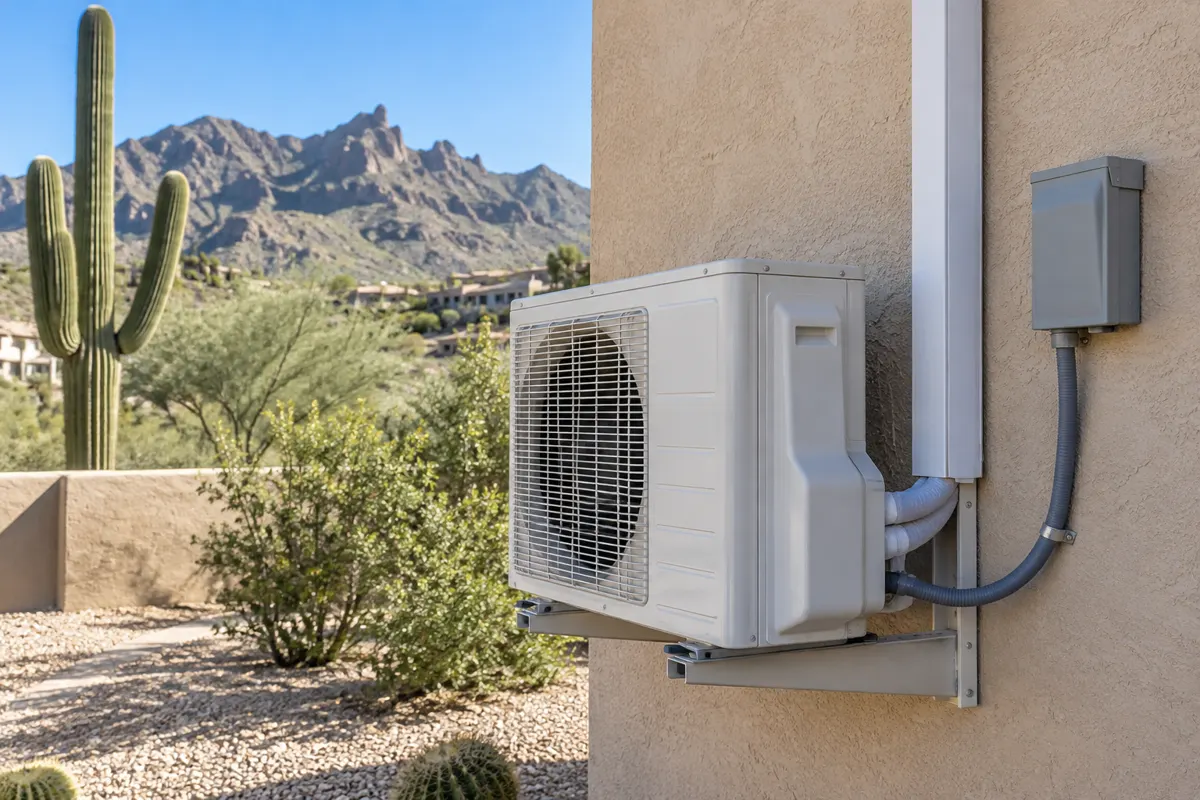
Mini-split electrical installation in Phoenix comes down to a few things: a dedicated circuit sized to the unit, a disconnect at the outdoor unit, room in your panel, wiring that holds up to our sun, and a permit. Usually an HVAC contractor sets the equipment and runs the refrigerant lines, and an electrician brings power to it. Sometimes one company handles both. Either way, it helps to know what the electrical work involves before the unit shows up on your doorstep.
A single-zone system has one outdoor unit and one indoor head. A multi-zone system has one outdoor unit feeding two or more indoor heads. In many systems, the outdoor unit gets the dedicated circuit and the indoor heads get their power and controls through a cable from the outdoor unit, so there's one new circuit at the panel. Other models power the indoor unit separately. Don't assume. Check the manual before the electrical estimate, because it changes how many circuits and breakers the job needs.
If you're cooling several rooms with separate single-zone systems, each one usually needs its own circuit. That's where panel space and capacity start to matter.
Have these ready and the electrician can plan the job in one visit.
B and D Electric LLC · banddelectricaz.com
Usually a single mini-split fits fine. Mini-splits are efficient, and a single-room unit draws far less than a whole-house AC system. The problem shows up when the mini-split is one more load added to a panel that is already working hard: central AC, an electric range and dryer, a pool pump, maybe an EV charger. In Phoenix, all of that tends to run at the same time on a July afternoon.
The right way to know is a load calculation, not a glance at the main breaker. If the panel has the capacity but no open spaces, a subpanel may solve it. Our post on subpanels vs panel upgrades explains the difference. If the service itself is maxed out, our post on AC load and your panel walks through what a load calculation looks at, and the panel upgrade cost guide covers what drives the price if you need more capacity.
Outdoor wiring here takes a beating. The run from the disconnect to the unit is usually liquid-tight flexible conduit, and materials that aren't rated for sunlight get brittle and crack after a few summers. Wall-mounted condensers on west- and south-facing walls see the worst of it. A few things we pay attention to:
The two most common mini-split jobs we see are garages and casitas. A garage mini-split often lands on the same wall as the panel, which keeps the circuit short. If you also want a 240-volt outlet for a compressor or welder, plan both at once. Our garage 240V outlet post covers that. In a detached casita, the mini-split usually feeds from the casita's subpanel, and it's often the biggest load in the building. Our casita electrical guide goes through sizing that feeder.
Adding a new circuit is permitted electrical work in Phoenix and the surrounding cities. Some HVAC permits include the electrical connection and some don't, so ask who is pulling the permit and what it covers. ENERGY STAR's ductless heating and cooling page is a good place to compare efficient units before you buy.
In Fountain Hills, mini-splits often go into garages, guest suites and rooms on the far end of homes built into the hillsides, where the central system struggles to keep up. Two local details matter. Fountain Hills is its own town, so permits go through the Town rather than the City of Phoenix. And many neighborhoods have HOA rules about where exterior equipment and conduit can be seen from the street, so check those before you pick a spot for the outdoor unit. Hillside lots can also put the panel a long way from the best condenser location, which affects wire size and routing.
You can see the rest of our home electrical work on our residential electrical page, and our panel upgrades page if your panel needs more room.
If you're adding a mini-split and need the circuit, disconnect or a panel check, send us the model number and a photo of your panel and we'll tell you what it takes. B and D Electric LLC is licensed and bonded, Arizona ROC 361086, and our two owners have more than 40 years of combined experience. Call or text (480) 828-1181, or request an estimate.

Tell us what's going on and we'll give you a straight answer and a free written estimate. No pressure, no upsell.