HomeGalleryFAQAdvice
Contact
Panels & Service · October 22, 2026
It's a dry climate, so most Phoenix homeowners are surprised when they open the panel door and see rust. But outdoor panels here take a beating: sprinklers, monsoon rain blowing sideways, flood irrigation and years of sun cracking the seals. Here's what rust in an electrical panel means and what to do about it.
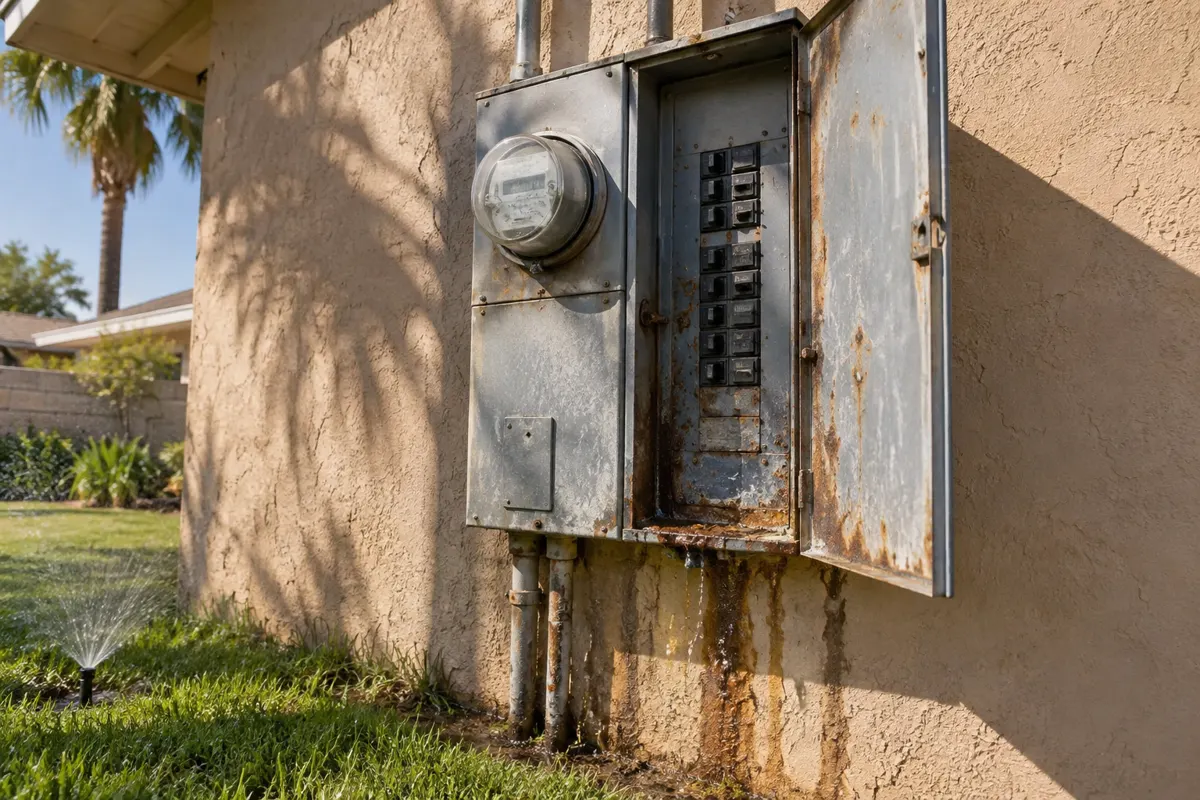
Rust in an electrical panel is a sign that water has been getting in, and in Phoenix that usually means the problem is outside the box, not inside it. A little surface rust on the outside of the door is cosmetic. Rust on the breakers, the bus bars or the wire connections is a different story. This guide walks through how to tell the difference, what causes it in Valley homes, and when the fix is a repair versus a new panel.
Most panels in the Valley are mounted on an exterior wall, often combined with the meter. They're built to shed rain, but only when everything is intact and nothing is spraying them every day. The common sources we see:
Not every orange spot is an emergency. Here's how we size it up on a service call:
Usually cosmetic: light rust on the outer door or the outside of the enclosure, with no water stains inside and clean, dry breakers. That can often be cleaned, primed and painted, and the water source dealt with.
Needs an electrician soon: rust stains running down inside the panel, rust at the bottom of the enclosure, white or green crust on wire terminals, or a breaker that looks discolored. Corrosion adds resistance at connections, and resistance makes heat.
Usually means replacement: rust on the bus bars where breakers clip in, breakers that are rusted or won't reset, rusted-through spots in the enclosure, or signs of heat like scorching or melted insulation. A breaker that has sat in moisture may not trip the way it was designed to, and you can't tell that by looking at it.
Look from a dry spot. Don't open the inner cover yourself.
B and D Electric LLC · banddelectricaz.com
Electrical panels depend on tight, clean metal-to-metal connections. Breakers clip onto the bus bars, and every wire is clamped under a terminal screw. Corrosion gets between those surfaces. A corroded connection can run hot, and in a Phoenix summer, when the AC runs for hours and the panel is already sitting in the sun, that extra heat matters. If you're also hearing a hum or feeling warmth, read our post on a buzzing or warm electrical panel.
Moisture also affects the grounding and bonding connections in the panel, which are part of what makes a fault trip a breaker instead of energizing something metal. That's one more reason not to ignore rust at the bottom of the box, where those connections often sit.
If the rust is cosmetic and the source is fixed, a repair may be all you need: redirect the sprinklers, reseal the top and the mast, plug open knockouts, replace missing hardware and fix the grade so water drains away from the wall. If individual breakers are affected but the bus is clean, replacing those breakers can be an option.
Once the bus bars, the main breaker or the enclosure itself are corroded, replacement is usually the safe answer. On many Phoenix homes the meter and panel are one unit, so that often means a meter-main combo replacement, which involves SRP or APS. The meter belongs to the utility, so never break the seal or pull it yourself. If the water came in through a damaged mast, see our post on service mast repair. Our panel upgrades page explains how we handle the permit and utility coordination, and the panel upgrade cost guide explains what drives the price.
If the panel is being replaced anyway, it's a good time to think about capacity. Adding a pool, an EV charger or a second AC later is easier when the new panel is sized for it.
If water has reached your panel during a storm or flooding, stay out of the water. APS's safety page warns to stay away from flooded areas, especially where equipment is underground, because parts of the system can energize even when flooded. Once it's dry and safe, have an electrician inspect the panel before assuming everything is fine just because the lights came back on.
Around the Biltmore area and nearby central Phoenix neighborhoods, many homes are decades old, with mature landscaping, lawns watered right up to the house, and in some streets flood irrigation. Those are exactly the conditions that keep the bottom of an outdoor panel wet. Older panels there have also had more years of sun on their seals. If your panel sits next to a lawn or a planter, check it after the next watering.
Send us a photo of your panel from a dry spot, door open if it's safe to do so, and we'll tell you whether it looks cosmetic or needs a closer look. B and D Electric LLC is licensed and bonded, Arizona ROC 361086, and our two owners have more than 40 years of combined experience. Call or text (480) 828-1181, or request an estimate.
Tell us what's going on and we'll give you a straight answer and a free written estimate. No pressure, no upsell.