HomeGalleryFAQAdvice
Contact
Safety · October 11, 2026
Plenty of older Valley homes still have two-prong outlets, or three-prong outlets with no ground behind them. Here's what that means, which fixes are safe, and which popular shortcut is actually dangerous.
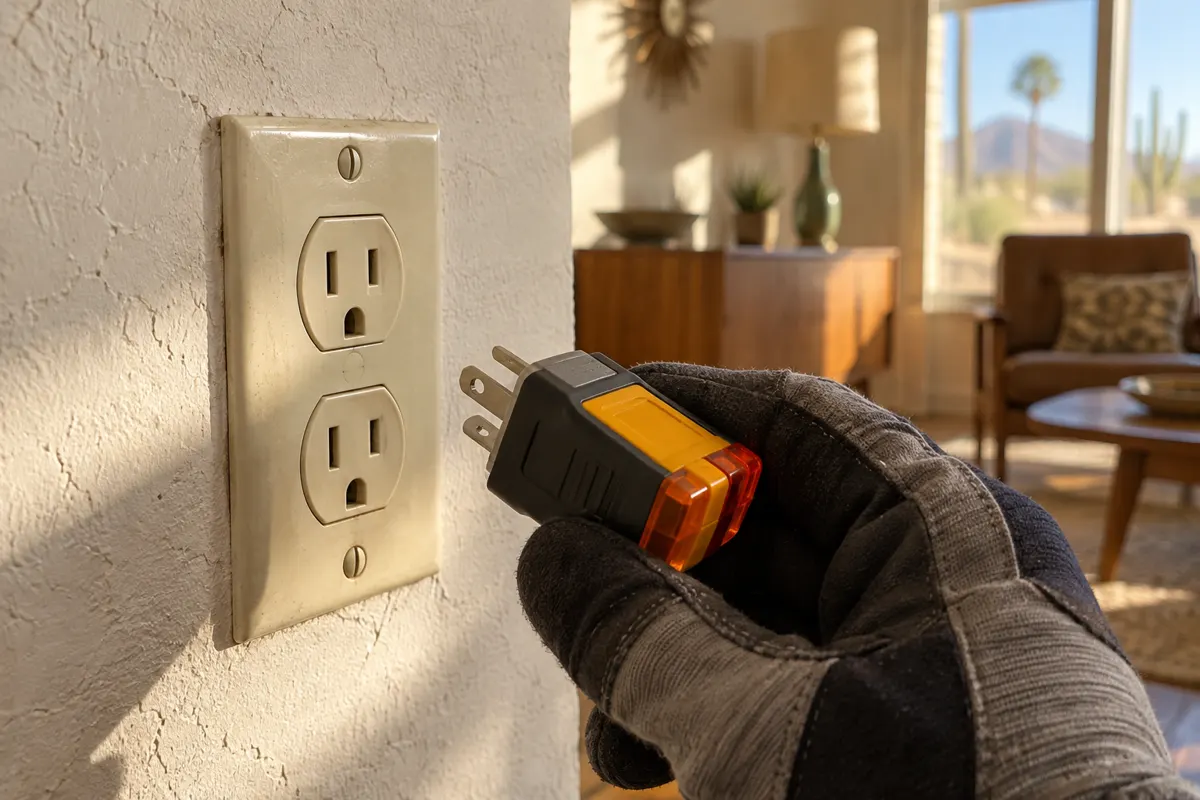
Two-prong outlet replacement is one of the most common questions we get from Phoenix homeowners in older houses. A two-prong outlet has no ground connection. That was normal when a lot of the Valley's first ranch homes were wired, but today's appliances, computers and surge protectors expect a ground. The good news is there are several safe ways to deal with it, and not all of them mean opening walls.
Homes wired before grounded outlets became standard used two-wire circuits: a hot and a neutral, with no third wire for ground. In the Valley that means many houses from the 1950s and early 1960s, plus older homes in central Phoenix. Many of these homes have plaster walls and long attic runs, which affects how easily new wire can be pulled.
Two-prong outlets aren't automatically a defect. If the wiring is in good shape, a two-prong outlet on a two-wire circuit is doing what it was built to do. The problems start when people try to make it look grounded.
The most common thing we find isn't a two-prong outlet. It's a three-prong outlet that someone installed on a two-wire circuit, with nothing connected to the ground screw. It looks modern, it accepts a three-prong plug, and it gives no ground at all. A cheap plug-in tester will usually show "open ground." Home inspectors check for it on nearly every older Valley house.
There are a few accepted ways to handle an ungrounded outlet. Which one fits depends on what is plugged in there and what the wiring looks like.
From the quickest fix to the most complete one.
B and D Electric LLC · banddelectricaz.com
A GFCI watches the current going out on the hot wire and coming back on the neutral. If some of it leaks out, for example through a person, it shuts off fast. That's why a GFCI is an accepted fix for ungrounded outlets: it protects people from shock even without a ground wire. One GFCI at the first outlet on a circuit can protect the outlets downstream of it.
What a GFCI can't do is give equipment a path to ground. Surge protector strips need a ground to divert a surge, and some electronics and appliance instructions call for a grounded outlet. So GFCI is a good fix for a bedroom lamp outlet, and not a good fix where your home office or TV and audio gear plugs in. If a GFCI on an older circuit keeps tripping, our post on why a GFCI keeps tripping walks through the usual causes.
Monsoon storms bring lightning and utility switching, and that means surges. A whole-house surge protector at the panel only works if the home's grounding system is sound, and point-of-use strips only work if the outlet is grounded. If you're adding whole-house surge protection, have the grounding checked at the same time.
Heat matters too. Old two-wire cable in a Phoenix attic has spent decades in some of the hottest attics in the country, and the insulation on it can get brittle. If an electrician opens a box and the insulation crumbles, rewiring that circuit is usually the better fix than adding a ground.
Before grounding individual outlets, we check the grounding and bonding at the service: the grounding electrode conductor, the ground rod or other electrode, and the bonding of water and gas piping. Running new ground wires to a panel whose own ground is missing or corroded doesn't accomplish much. Older homes with two-prong outlets often also have an original panel, so we look at that too. If it needs replacing, our panel upgrade cost guide explains what drives the price.
Most homeowners don't need every outlet grounded on day one. A sensible order looks like this:
In Scottsdale, much of the south end was built out from the 1950s through the 1970s, so we see original outlets, open-ground three-prongs and older panels side by side. Swapping an outlet is small work, but new wiring is a different story: the City of Scottsdale's permit services page says installing, altering or repairing wiring requires an electrical permit. We pull it when the job calls for one.
Swapping a two-prong outlet for another two-prong is a common homeowner job. Anything past that, like grounding, GFCI layout, opening old boxes with brittle wire or tying into the panel, is work for a licensed electrician. A GFCI wired backwards or in the wrong spot on the circuit can leave outlets unprotected while the test button still seems to work. Our residential electrical page covers the rest of what we do in older homes.
Text us a photo of the outlets, the inspection report item if you have one, and your panel. We'll tell you which fix fits each room and give you a free written estimate. B and D Electric LLC is licensed and bonded, Arizona ROC 361086, and our two owners have more than 40 years of combined experience. Call or text (480) 828-1181, or request an estimate.

Tell us what's going on and we'll give you a straight answer and a free written estimate. No pressure, no upsell.