HomeGalleryFAQAdvice
Contact
Residential · November 7, 2026
Dedicated circuit installation is one of the most common small jobs we do in Phoenix homes, and it usually starts with a breaker that keeps tripping when two things run at once. A second fridge in the garage, a new microwave, a treadmill or a home office full of gear all add load to circuits that were sized for a different way of living. Here's how to tell when an appliance needs its own circuit and what the job involves.
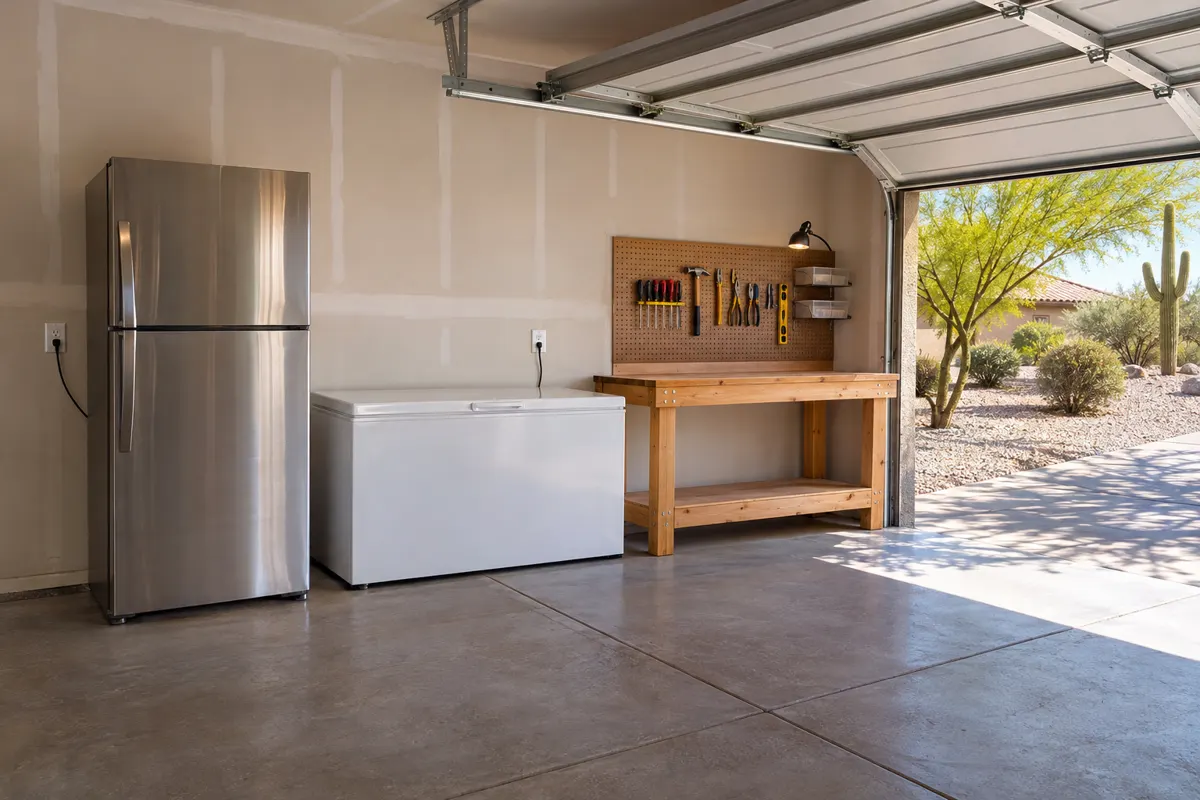
A dedicated circuit is a circuit that feeds one appliance or one outlet for one purpose, with its own breaker in the panel. Nothing else shares it. Most rooms in a house are wired on general-purpose circuits that feed several outlets and sometimes the lights, too. That works fine for lamps, phone chargers and a TV. It doesn't work well when one appliance draws a lot of power on its own, or when an appliance has to keep running no matter what else is plugged in.
A dedicated circuit doesn't have to be 240 volts. Many are ordinary 120-volt circuits with a standard-looking outlet. If you need a 240-volt outlet for a welder, compressor or EV, our garage 240V outlet guide covers that side.
Some appliances need their own circuit because code requires it, and many more because the manufacturer's installation instructions call for it. The instructions are the first thing we read, because the inspector reads them too. Common ones in Phoenix homes:
The garage fridge is the classic Phoenix case. In summer, an attached garage gets very hot, and a refrigerator or freezer out there runs much longer and harder than the one in the kitchen. Each time the compressor starts it pulls a short surge of current. Put that on the same garage circuit as a shop vac, a miter saw or a garage door opener, and the breaker trips. If you're not in the garage, you may not find out until the food has spoiled.
A garage outlet is normally GFCI-protected, and a fridge on a GFCI that trips once and stays off is one of the most frustrating calls we get. A dedicated circuit doesn't remove the GFCI requirement, but it does take the other loads off the line, which removes a lot of nuisance trips. If your GFCI trips even with nothing else running, read our post on GFCI outlets that keep tripping; the appliance or the outlet may be the real problem.
If any of these sound familiar, an appliance may need its own circuit.
Source: Warm or discolored outlets: see the U.S. Fire Administration on appliance and electrical fire safety.
B and D Electric LLC · banddelectricaz.com
The clearest sign is a pattern: the same breaker trips whenever the same two things run together. Our post on why breakers keep tripping explains how to tell an overloaded circuit from a short or a ground fault. An overload is the one a dedicated circuit fixes. Lights that dim when the microwave starts, a heavy appliance on an extension cord, or an outlet that feels warm are other signs. A warm or discolored outlet is not a wait-and-see problem; stop using it.
Don't fix a tripping breaker by putting in a bigger breaker. The breaker is sized to protect the wire in the wall. A larger breaker on the same wire lets the wire overheat before anything trips.
The job is straightforward in most homes, and the route the wire takes decides most of the work:
Attics here get extremely hot in summer, so we plan attic work for the morning when we can. Power is off for part of one day in most cases, while we connect the new breaker.
Plenty of older homes, including the 1950s and 1960s ranch houses around Arcadia, have panels with every space already used. That doesn't always mean a new panel. Depending on the panel, there may be room for a properly listed tandem breaker, or a small subpanel may make sense. Our post on subpanel vs. panel upgrade walks through that choice. If the panel is an older brand with known problems, or the service is already near its limit, upgrading may be the better move; start with our panel upgrade cost guide.
Many older Arcadia homes have been remodeled more than once, and the circuits don't always follow the new layout. A kitchen that once had one or two appliance circuits now has a built-in microwave, a wine fridge and a coffee station. The garage that once held a car now holds a gym. When we add a dedicated circuit in an older home, we also look at what's already in the panel, because that's when we find double-tapped breakers, old wiring or a panel that's out of room.
Send us a photo of your panel with the door open, tell us what the circuit is for and where it needs to go, and we'll tell you what the job involves. B and D Electric LLC is licensed and bonded, Arizona ROC 361086, and our two owners have more than 40 years of combined experience. We handle this and other home electrical work across the Valley. Call or text (480) 828-1181, or request an estimate.

Tell us what's going on and we'll give you a straight answer and a free written estimate. No pressure, no upsell.