HomeGalleryFAQAdvice
Contact
Commercial · November 6, 2026
If your office, shop or warehouse still runs on fluorescent tubes, the question isn't whether to go LED. It's how: new tubes, converted fixtures or new fixtures, and how to do it without shutting the business down. Here's how a commercial electrician looks at it.
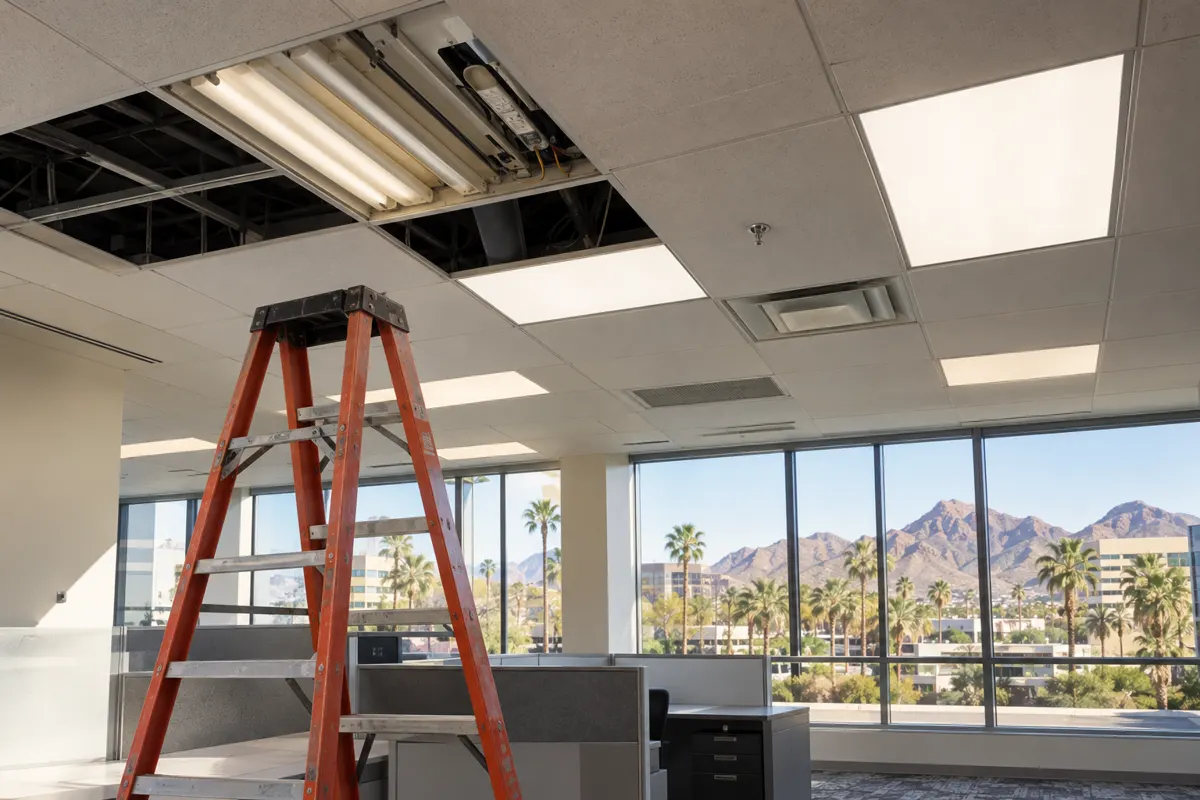
A commercial LED lighting retrofit in Phoenix usually starts the same way: a ceiling full of 2x4 or 2x2 fluorescent troffers, a few dead tubes, a ballast or two buzzing, and a maintenance person tired of climbing a ladder. LED lasts much longer, uses less power and puts less heat into a building that is already fighting the sun for most of the year. The decisions that matter are which retrofit method you choose, what happens to the controls, and how the work is scheduled around your business.
LED replacement tubes are sold in three main types, and the type decides how much electrical work is involved:
The fourth option is to skip tubes altogether and install new LED fixtures, such as flat panels or retrofit kits that drop into the existing ceiling grid. For tired, yellowed or damaged troffers this is often the cleaner job: new housing, new lens, new driver, one warranty source from the manufacturer, and nothing left from the old fixture. Our lighting installation page covers the fixture types we install.
Work through these before ordering tubes or fixtures for an office, shop or warehouse.
B and D Electric LLC · banddelectricaz.com
Lighting is only half the job. Many commercial spaces have occupancy sensors in restrooms and offices, timers or photocells on outdoor lighting, and dimmers in conference rooms. Not every LED product works with every control. A dimmer meant for incandescent loads can make LEDs flicker or hum, and some older sensors don't switch LED loads reliably. Energy codes adopted by Valley cities also set requirements for lighting controls on new and altered systems, so a bigger retrofit can bring sensors or controls into the scope. We check the controls you have, and what the city expects, before anything is ordered. If you already have new LEDs that flicker, our post on why LED lights flicker walks through the usual causes.
Some troffers in commercial buildings have a battery backup built in, so they stay lit during a power outage and people can get out. That backup has to be compatible with the LED product you choose, or replaced with one that is. The same goes for exit signs and emergency light units on the same circuits. They are easy to overlook in a retrofit and easy for a fire inspector to notice. We test emergency lighting at the end of the job, not just the main lights.
LED drivers don't like heat, and Phoenix has plenty of it. Wall packs on a west-facing wall, parking-lot heads and canopy lights at a gas station sit in direct summer sun and then hold that heat into the night. For outdoor work we choose fixtures rated for the conditions, sealed against dust and monsoon rain, and check the photocell or timer that runs them. If the parking lot lights are on a time clock that has never been adjusted, now is a good time to fix it. Some cities and HOAs also have outdoor lighting rules about how far light spills, so we ask before replacing pole heads.
The ENERGY STAR light fixtures page lists certified fixtures and explains what certification covers. It's a useful starting point when you're comparing products.
Most of our commercial lighting work happens around a business that can't close. In an office we can work one zone or one floor at a time, or after hours, so people aren't sitting under an open ceiling. On a Chevron Extra Mile convenience store remodel in Phoenix, we installed the new suspended LED lighting and illuminated signage on the sales floor while the store stayed open. The same approach works for retail, medical offices and warehouses: plan the sequence first, then the work.
A lighting retrofit is also a good moment to look at the panel. Fluorescent circuits that were close to full will have plenty of room after the change, which can free up capacity for other equipment. If the panel itself is old or a hazardous brand, it's worth knowing before you plan more electrical work. Our commercial electrical page covers the rest of what we do for businesses, and our post on Phoenix tenant improvements explains what's involved when the lighting change is part of a larger build-out.
The Biltmore area along Camelback Road is full of office buildings, medical suites and retail centers, many built with suspended ceilings and fluorescent troffers. Tenants in multi-tenant buildings usually need the landlord's or property manager's approval before changing fixtures, and some buildings have their own standards for fixture type and color temperature so suites match. We work with the property manager up front, and schedule the work so neighbors in the building aren't disrupted.
Send us the address, the type of space and a photo or two of the existing fixtures, and we'll walk the site and tell you which retrofit method makes sense room by room. B and D Electric LLC is licensed and bonded, Arizona ROC 361086, with $1M/$2M general liability, and our two owners have more than 40 years of combined experience. Call or text (480) 828-1181, or request an estimate.
Tell us what's going on and we'll give you a straight answer and a free written estimate. No pressure, no upsell.