HomeGalleryFAQAdvice
Contact
Residential · November 2, 2026
Replacing a light fixture with a ceiling fan is one of the most common requests we get in Phoenix, and it makes sense: in a place where the AC runs most of the year, a fan in the bedroom or living room earns its keep every day. Sometimes it really is a quick swap. Other times the box in the ceiling can't hold a fan, the switch can't control it the way you want, or there's no easy way into the attic. Here's how to tell which job you have before you buy the fan.
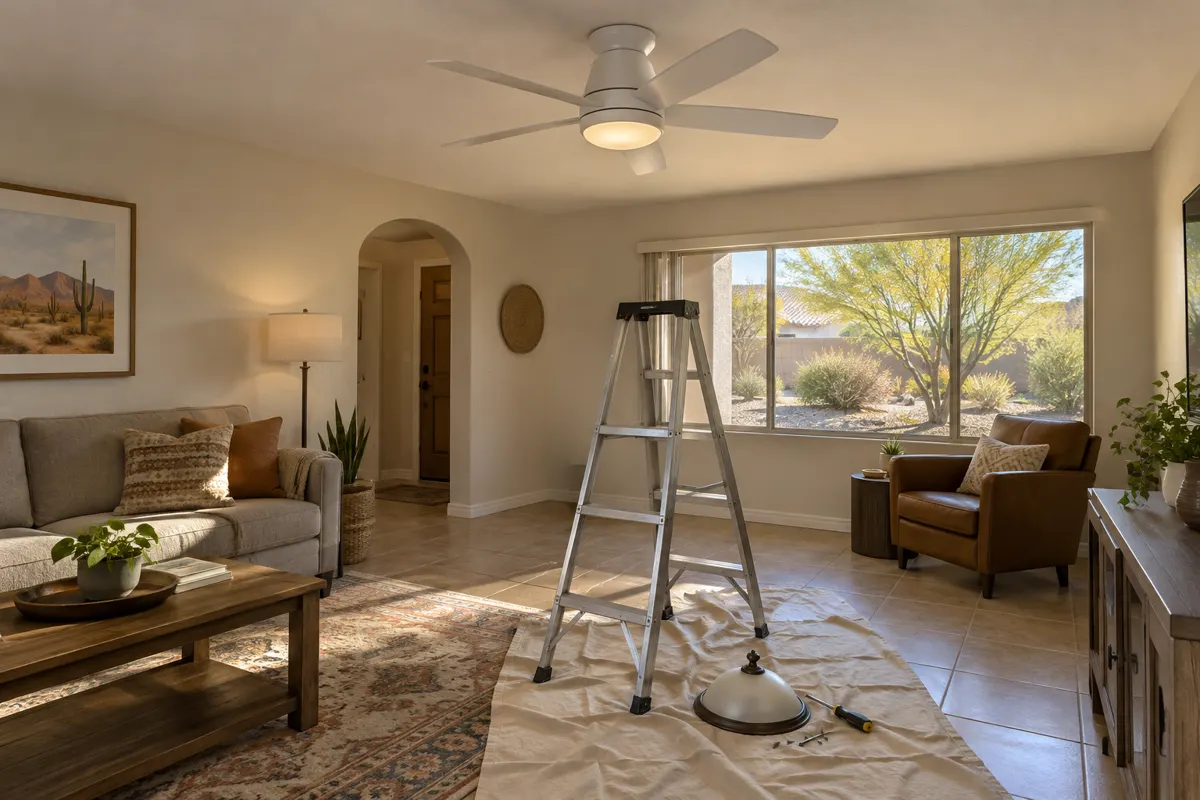
Usually, yes. Replacing a light fixture with a ceiling fan uses the same power that's already in the ceiling, so in most rooms you don't need a new circuit. What changes is the load hanging from the box. A light fixture just sits there. A fan weighs more and it moves, and that constant vibration works on every screw and connection holding it up. That's why the box, not the wiring, is the first thing an electrician checks.
Electrical boxes that are made to hold a ceiling fan are listed and marked for fan support. A standard light box, especially an older plastic box or a shallow "pancake" box nailed to the side of a joist, isn't made for a moving load. Hang a fan from one and you get a fan that wobbles, loosens over time, and in the worst case comes down. Our ceiling fan installation page puts it simply: if the existing box is a standard light box, it gets replaced.
There are two common ways to fix it. If the box sits right against a ceiling joist, a fan-rated box can be screwed directly to the framing. If it sits between joists, a fan brace (a bar that spans between two joists) goes in above the ceiling and the new box mounts to it. Many braces can be installed through the hole in the drywall, so a box change doesn't always mean getting into the attic.
The second question is how you want to control it. Most rooms that had a light fixture have one wall switch and one switched hot wire going to the ceiling. That gives you three options:
If you plan to put a smart switch on the fan, check two things first: the switch has to be rated for fan motors (a standard light dimmer is not), and many smart switches need a neutral wire in the switch box, which some older homes don't have there. Our post on LED lights flickering covers the no-neutral problem in more detail.
Run through this before you buy the fan. Each item can change the job.
B and D Electric LLC · banddelectricaz.com
Whether a fan job is quick or involved often comes down to what's above the ceiling. Many single-story ranch homes in Glendale and across the West Valley have an attic over most rooms, which makes bracing and new cable runs straightforward, if hot. Rooms under a flat roof, a vaulted ceiling or a later addition often have little or no space above them. In those rooms we work through the ceiling opening, pick a brace that installs from below, and plan any new switch wiring along the shortest route we can find.
Phoenix attics are a real factor in summer. On a hot afternoon an attic can be far hotter than the outdoor temperature, so we schedule attic work for the morning when we can. If you're planning several fans, it's worth doing them in one visit so the attic work only happens once.
Taking a light fixture down is a good chance to look at what's in the box. Light fixtures, especially enclosed globes in hot rooms, can bake the wire insulation over the years until it turns brittle and cracks when it's moved. Older homes may have wiring without a ground, or aluminum branch wiring that needs the right connectors. If we find any of that, it gets repaired before the fan goes up. Our aluminum wiring guide explains what to look for.
In summer, set the fan to spin so it pushes air down on you; that breeze is what makes the room feel cooler. A fan cools people, not the room, so turn it off when nobody is there.
Replacing a fixture on the same circuit is usually treated as a like-for-like swap. Putting a fan where there was never a box, adding a new switch, or running new cable is wiring work, and that's where permits come in. Rules vary by city, so our Phoenix electrical permit guide is the place to check what applies to you.
If you're adding several fans, an attic of new runs, or other home electrical work at the same time, we can price it as one visit.
Send us a photo of the fixture and the wall switch, tell us whether there's an attic above, and we'll tell you what the job involves. B and D Electric LLC is licensed and bonded, Arizona ROC 361086, and our two owners have more than 40 years of combined experience. Call or text (480) 828-1181, or request an estimate.

Tell us what's going on and we'll give you a straight answer and a free written estimate. No pressure, no upsell.