HomeGalleryFAQAdvice
Contact
Residential · November 9, 2026
Outdoor kitchen electrical work is the part of a backyard project most people think about last, and it's the part that's hardest to change once the stone and countertop are on. In Phoenix, fall is when a lot of these islands get built so they're ready for the cool months. Here's how an electrician plans the power for an outdoor kitchen, and what to settle before the mason or the island kit shows up.
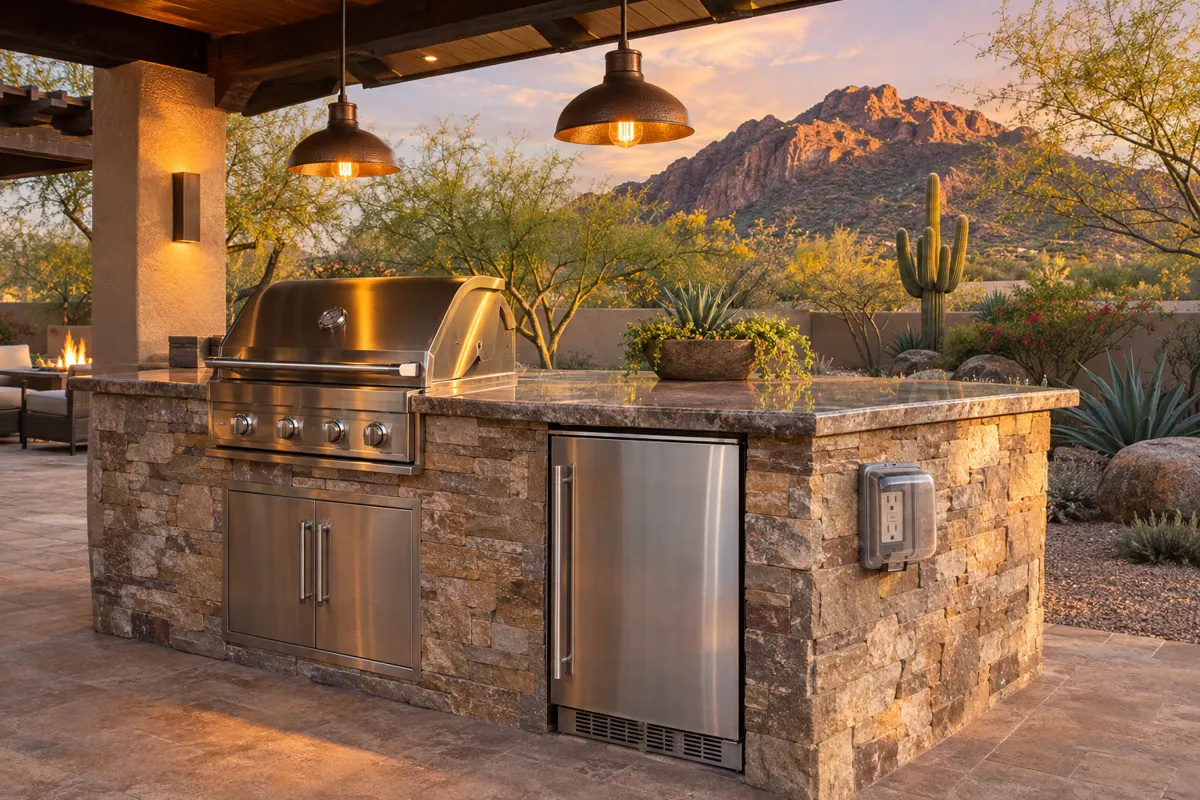
Most outdoor kitchen islands are block or a steel frame finished with stone, stucco or tile. Once that finish goes on, every outlet location, conduit run and junction box is locked in. Moving one later means cutting into the island. So the order matters: decide on appliances, then lay out the power, then build.
Start with a list of everything that will plug in or be hardwired, now and in a few years:
Every item on that list either needs its own circuit or shares one, and a few may need 240 volts. The appliance installation instructions tell you which. Bring them to the estimate.
Settle these before the island is finished.
Source: Call 811 before every digging job: Southwest Gas, Safety.
B and D Electric LLC · banddelectricaz.com
There's no single answer, because it depends on the appliances. A few rules of thumb from the jobs we see:
If the island is far from the house, a small subpanel near the kitchen can be cleaner than running several separate circuits all the way back. Whether that makes sense depends on the total load and the distance.
Outdoor receptacles need GFCI protection, and an outdoor kitchen has water, metal and people standing on wet pavers, which is exactly what GFCI is for. Put the GFCI where you can reach it to reset. A GFCI buried behind the refrigerator or in a cabinet nobody opens is a common call: the fridge stops, the food spoils and nobody knows why.
Use in-use covers (the deep "bubble" covers that close with a cord plugged in) on any outlet that might have something plugged in for a while, and boxes, fittings and fixtures rated for the location. Our post on outdoor outlet installation goes deeper on GFCI and covers, including the nuisance trips that monsoon rain brings.
Most outdoor kitchens are fed by wire in conduit buried in a trench from the house to the island. That trench has to cross whatever is in the yard: irrigation lines, the pool equipment pad, gas lines to the grill or fire pit, and the utility's own buried lines. Southwest Gas says every digging job requires a call to 811 before you dig, and that utility-owned lines get marked for free. Private lines you or a previous owner added, like a gas line to a fire pit or low-voltage landscape wire, aren't marked by 811, so tell us where they are.
Timing matters. Run the conduit before the pavers, turf or concrete go down, and coordinate with the plumber and gas installer so everything shares a plan instead of three trenches. In a Phoenix summer, trenching in caliche is slow, hot work, so fall and winter are the easier seasons for it.
A fridge, a few outlet circuits and lighting usually fit. Add an electric grill, a patio heater, a spa and an EV charger, and the panel may be out of spaces or capacity. We do a load calculation before adding circuits, not a guess. If it turns out you need more room, our panel upgrade cost guide explains what drives the cost, and our post on subpanels vs. panel upgrades covers the choice.
Many homes in Paradise Valley sit on large lots, so the outdoor kitchen is often a long way from the main panel, past a pool, a lawn and a lot of landscaping. Long runs need properly sized wire, and that's another reason a subpanel near the backyard can make sense. Paradise Valley is its own town with its own permit process, so the permit is pulled there, not with the City of Phoenix. Our electrical permit guide explains what inspectors look for.
Send us the appliance list or the island drawing, a photo of your panel with the door open, and where the island will sit. We'll lay out the circuits before the stone goes on. B and D Electric LLC is licensed and bonded, Arizona ROC 361086, and our two owners have more than 40 years of combined experience. We handle outdoor kitchens and other home electrical work across the Valley. Call or text (480) 828-1181, or request an estimate.

Tell us what's going on and we'll give you a straight answer and a free written estimate. No pressure, no upsell.