HomeGalleryFAQAdvice
Contact
Residential · October 28, 2026
Induction cooking has gone from a restaurant novelty to something a lot of Valley homeowners ask us about. The cooktop itself is the easy part. What decides whether it's a simple swap or a real project is the circuit behind the range, and whether your panel has room for one.
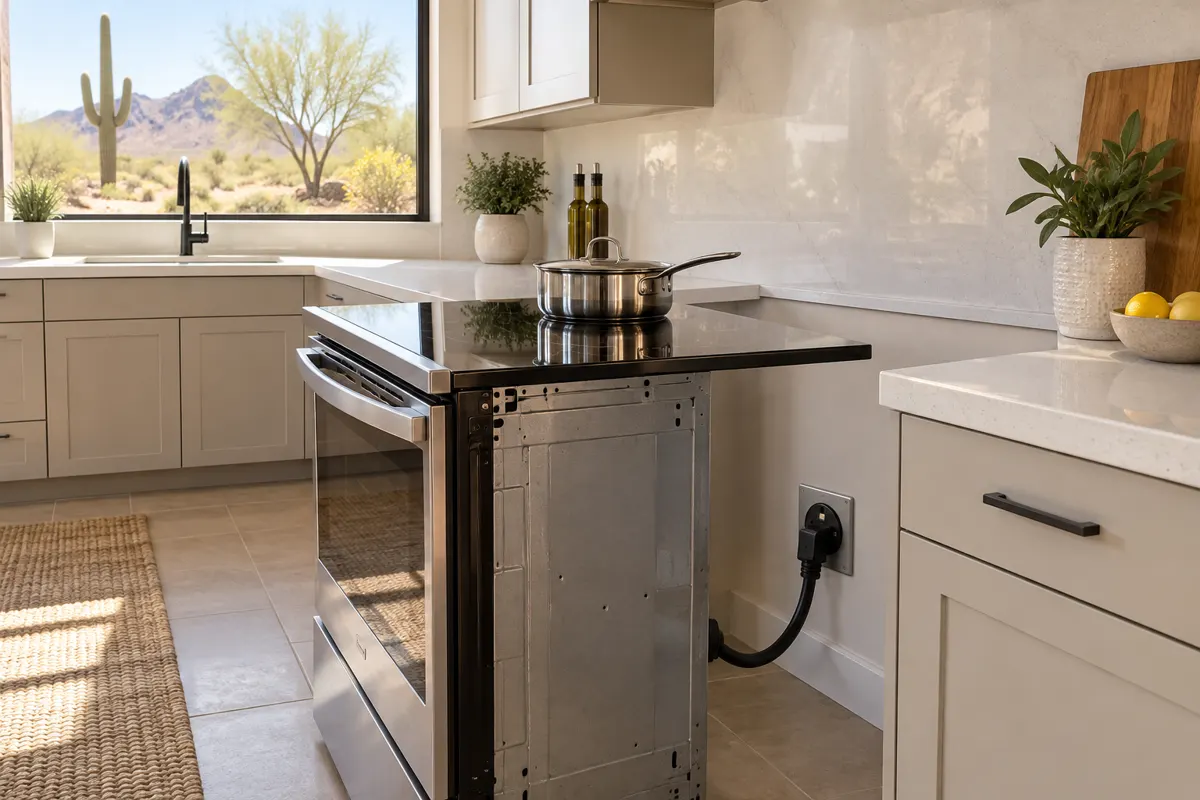
Induction cooktop electrical requirements trip up a lot of Phoenix homeowners because the answer depends on what's in the kitchen now. If you already have an electric range, you may only need to confirm the circuit matches the new appliance. If you cook on gas today, there's probably no 240-volt circuit behind the stove at all, and one has to be run from the panel. Here's what to check before you buy, so the new range doesn't sit in the garage waiting on an electrician.
Almost every full-size induction range and built-in induction cooktop sold in the U.S. runs on 240 volts. The exact requirement is printed in the installation manual, which you can usually download from the manufacturer's site before you buy. Look for four things:
A few newer induction ranges are designed to plug into a standard 120-volt outlet, using a built-in battery to supply extra power while you cook. They're an option when running a 240-volt circuit is hard, but they're still uncommon, and the same rule applies: follow the manual for the outlet and circuit it needs.
A quick checklist for Phoenix kitchens.
B and D Electric LLC · banddelectricaz.com
This is the simpler case. Pull the old range out, turn the breaker off and look at the outlet. A 4-slot range outlet on a circuit whose breaker and wire match the new range's manual usually means you just plug in the new cord. If the outlet is 3-slot, the new range can typically be connected with a 3-wire cord set up exactly as the manual describes, as long as the existing circuit was installed correctly. If the breaker is smaller than the manual calls for, or the outlet is scorched, loose or cracked, the circuit needs work before the new range goes in.
Don't just swap a 3-slot outlet for a 4-slot one so the new cord fits. Without a fourth wire back to the panel, there's no real ground, and the next person will assume there is.
Most gas-to-induction conversions in the Valley need a new 240-volt circuit run from the main panel to the kitchen. How involved that is comes down to three things:
If your panel is out of spaces but has capacity to spare, a subpanel or other approach may work; our post on subpanel vs. panel upgrade explains the difference. If the service itself is maxed out, our panel upgrade cost guide covers what drives the price of going bigger. The gas side, shutting off and capping the old line, should be handled by a licensed plumber or gas fitter, not by the electrician and not as a DIY job.
Heat is the local angle. According to ENERGY STAR's electric cooking products page, about 85% of the heating energy from induction goes into what's in the pan, compared with about a third for gas, and less heat is released into the kitchen. When it's 110 degrees outside and the AC is already running hard, a cooktop that doesn't heat up the room is a real benefit. The glass surface also isn't hot to the touch without a pan on it, which homeowners with kids appreciate.
ENERGY STAR also points out the easy cookware test: if a refrigerator magnet sticks to the bottom of a pan, it will work on induction. Cast iron, enameled cast iron and many stainless pans pass. Aluminum, copper and glass won't, unless they have a magnetic base.
If you're doing the range as part of a bigger kitchen project, plan all the circuits together. Countertop outlets, lighting, a microwave drawer and the range can share one permit and one trip to the panel. Our kitchen remodel electrical guide walks through the full list. A straight swap with a new range circuit is a smaller job, but new circuits still generally need a permit and inspection through your city.
Mesa is one of the Valley cities where gas cooking is common. Parts of the city are served by Mesa's own municipal gas utility, and the rest by Southwest Gas. Older neighborhoods near downtown and west Mesa have plenty of 1950s to 1970s homes with original or near-original panels, where a gas range was never wired for an electric replacement. In those homes we look at the panel and service first, because adding a 240-volt cooking circuit to an old, full panel is where problems start.
Ranges pull heavy current for long stretches, so a tired connection shows up there. Shut the range off and call an electrician if you notice:
Our post on a hot outlet or burning smell covers what to do in the moment.
Send us a photo of the wall behind your current stove, the label inside your panel door and the model number of the range or cooktop you're looking at, and we'll tell you whether it's a plug-in swap, a new circuit, or a panel question. Our residential electrical page covers the rest of what we do around the house. B and D Electric LLC is licensed and bonded, Arizona ROC 361086, and our two owners have more than 40 years of combined experience. Call or text (480) 828-1181, or request an estimate.
Tell us what's going on and we'll give you a straight answer and a free written estimate. No pressure, no upsell.