HomeGalleryFAQAdvice
Contact
Residential · November 12, 2026
A video doorbell looks like a five-minute swap for the old button. Then it reboots every afternoon, the chime buzzes, or the app says the battery is draining even though it's wired. Almost every one of those problems traces back to the low-voltage system behind the button. Here's how it works and what to check.
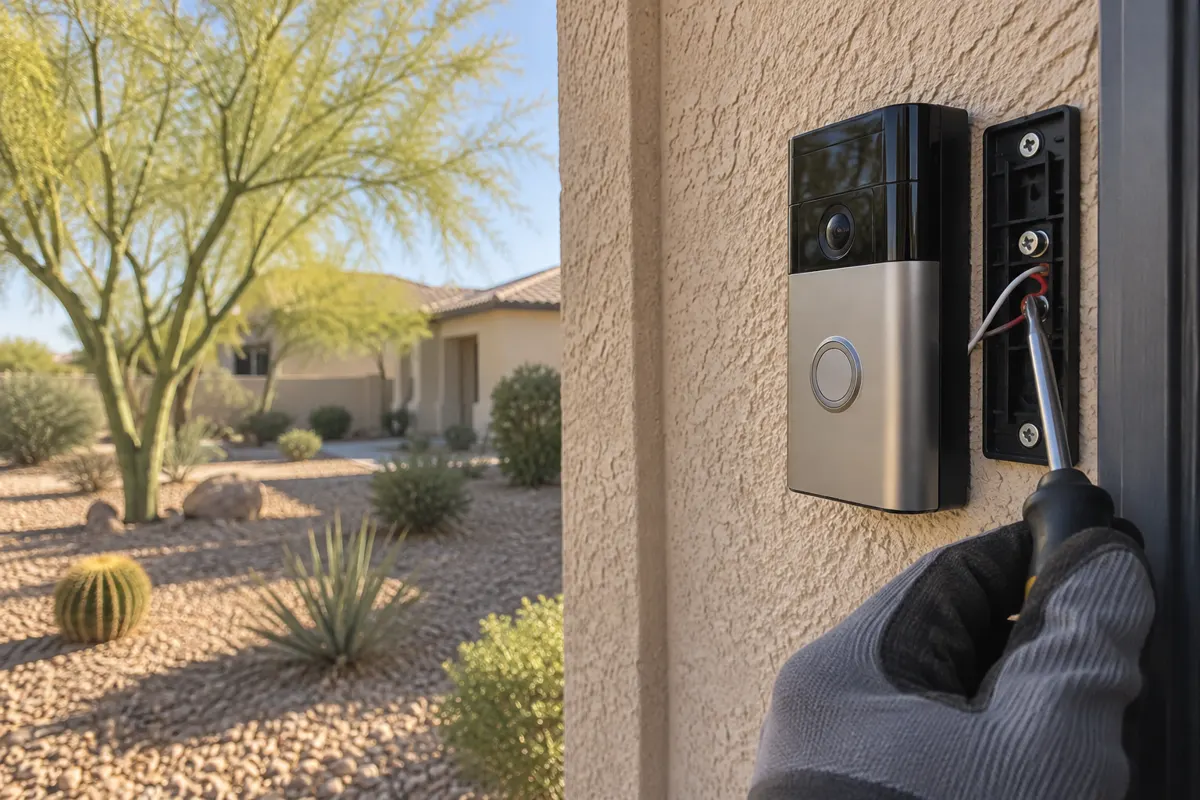
Video doorbell wiring in Phoenix homes is usually the original doorbell circuit from when the house was built: a small transformer, a chime box on a hallway wall, and two thin wires running to the button by the front door. That system was designed to ring a bell for a second at a time. A video doorbell asks it to power a camera, a radio and a speaker all day, every day. Sometimes the old system keeps up. Often it doesn't.
Three parts do the work. The transformer takes your home's 120-volt power and steps it down to a low voltage. The chime makes the sound. The button closes the circuit when someone presses it. A video doorbell replaces the button, but it still depends on the transformer and usually on the chime, so all three have to match what the doorbell maker calls for.
The transformer is the part most people never see. In Valley homes it's commonly mounted on a junction box near the electrical panel, in the garage, in the attic, inside the chime box or in a closet near the furnace or air handler. It has a small label that lists its output voltage and its VA (volt-amp) rating. Those two numbers decide whether your video doorbell will run reliably.
Wi-Fi problems can look similar, so check signal strength at the front door too. But if the router is close and the doorbell still restarts, power is the first suspect.
Compare each item with your doorbell maker's installation guide.
B and D Electric LLC · banddelectricaz.com
Many older doorbell transformers were sized for a mechanical chime and nothing more. A video doorbell may call for more voltage, more VA, or both. When the transformer can't keep up, the doorbell browns out every time it draws extra power, which is why the problem often shows up exactly when someone rings or the camera wakes up. The fix is a transformer with the voltage and VA your doorbell maker lists.
This is the point where the job stops being a low-voltage swap. The transformer's primary side is connected to a regular 120-volt household circuit, usually inside a junction box. Replacing it means turning off the right breaker, making line-voltage connections and closing the box up correctly. If you're comfortable with low-voltage wiring but not with that, it's a good place to stop and call an electrician.
Most video doorbells are built to work with the existing chime, but not every chime cooperates. Some require a small adapter or power kit installed inside the chime box. Others work best with the chime bypassed and a plug-in chime used instead. If your chime buzzes or rings constantly after the swap, the doorbell and chime aren't set up for each other. Check the installation guide for your model and chime type.
Here, the front door often faces the afternoon sun, and the button wire has spent decades in a hot wall or a stucco cavity. That wire can get brittle, and connections at the button can corrode. A video doorbell draws power constantly, so a weak connection that never bothered a plain button can cause dropouts. Heat also affects the doorbell itself. Check the operating temperature range in its spec sheet, and if your front door bakes in summer, ask about a shaded spot or an angled mount. Our post on what Phoenix summers do to your wiring covers how heat ages connections.
Many homes in Glendale and across the West Valley were built in the 1970s and 1980s, and plenty still have the original doorbell transformer and chime. In those homes the transformer is often tucked somewhere nobody remembers, so the first step is finding it. Some newer neighborhoods also have HOA rules about what can be mounted on the front of the house, which is worth checking before you add floodlight cameras or exterior outlets alongside the doorbell.
A doorbell is often the first piece of a bigger plan: floodlight cameras on the eaves, a camera in the garage, or a hub that needs an outlet. A hardwired floodlight camera usually replaces an existing light fixture, and new locations need power run to them. Outdoor outlets need weather-resistant devices and covers, which our post on outdoor outlet installation explains. If you're also swapping switches for smart ones, read our guide on smart switch installation first, since many older boxes have no neutral wire.
If the doorbell still drops offline after all that, the problem may be the house wiring upstream, a loose connection on the circuit feeding the transformer, or something else that needs electrical troubleshooting. When you hire anyone for line-voltage work, you can look up their license on the Arizona Registrar of Contractors search.
Send us a photo of the doorbell transformer label if you can find it, a photo of the chime with its cover off, and the model of your doorbell. We'll tell you what's likely wrong before we come out. B and D Electric LLC is licensed and bonded, Arizona ROC 361086, and our two owners have more than 40 years of combined experience. We handle residential electrical work, lighting installation and repairs across the Valley. Call or text (480) 828-1181, or request an estimate.

Tell us what's going on and we'll give you a straight answer and a free written estimate. No pressure, no upsell.